Ledger Live: DeFi and Web3 Integration
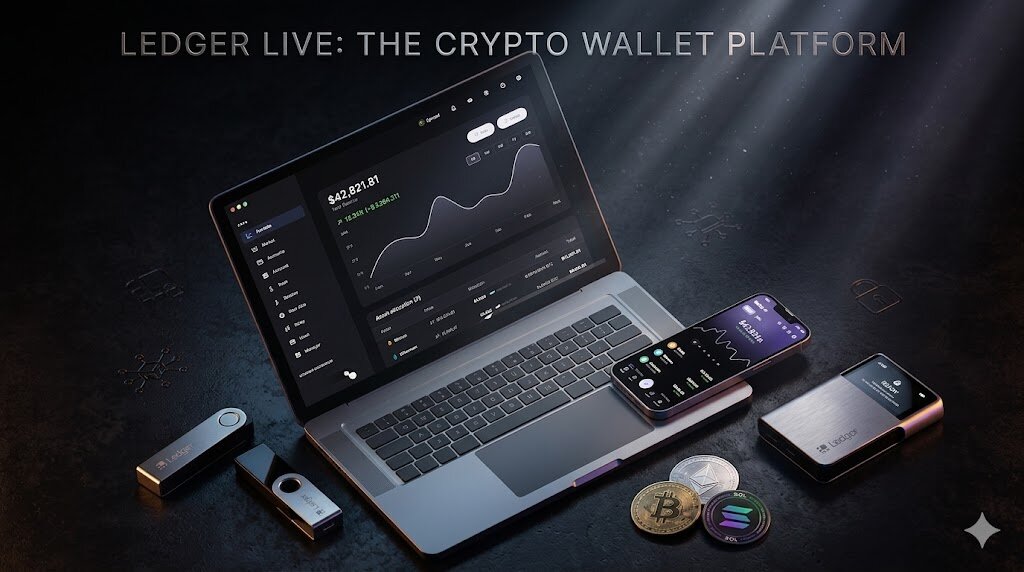
Where Ledger Live Fits in the DeFi Landscape
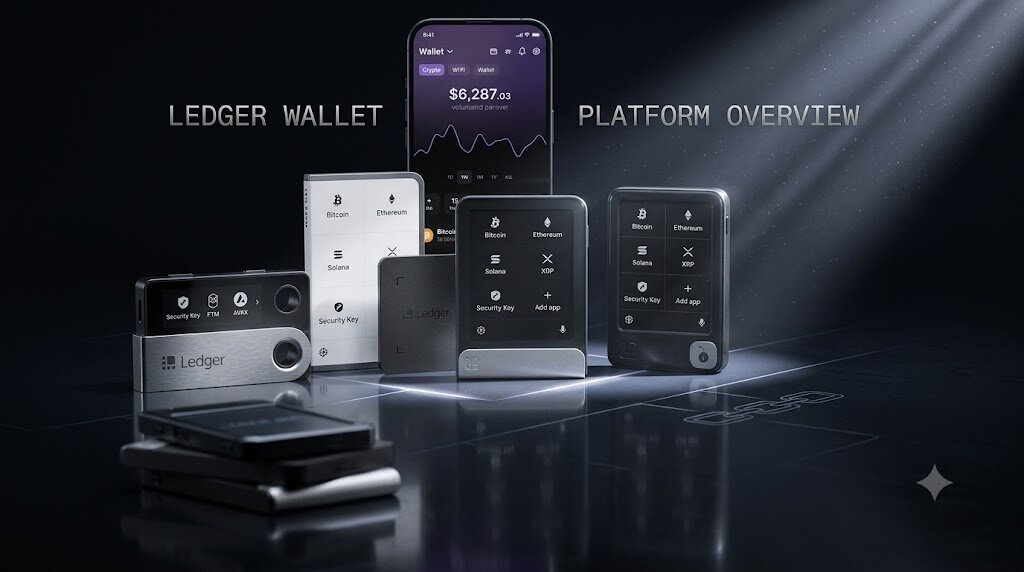
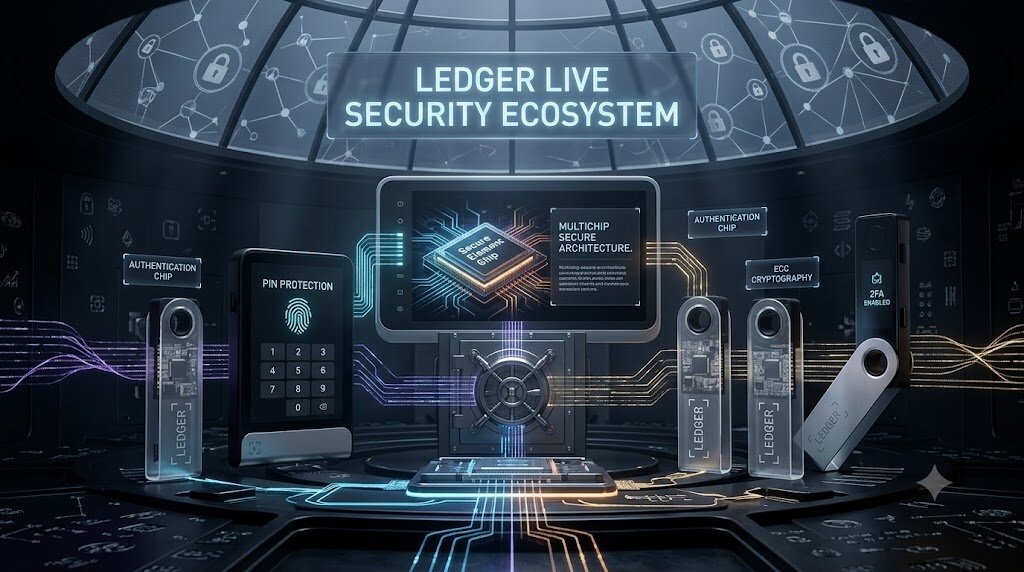
Hardware Security for Smart Contract Interactions Smart contract calls involve signing transactions that authorize contracts to perform various actions. Without hardware protection, malicious contracts could theoretically drain wallets if users approve manipulated transaction data. Hardware verification catches manipulation before signatures happen. Displaying transaction details on the connected device screen matters more for DeFi than for simple transfers. A basic send transaction shows recipient and amount. A DeFi transaction might invoke complex contract logic affecting multiple assets, and users need to see what they're actually authorizing rather than trusting the computer display. Clear signing capabilities on newer Ledger devices decode contract interactions into human-readable format when possible. Users see which specific action gets authorized rather than just an opaque hex string. This clarity matters enormously since DeFi mistakes often stem from users signing what they thought was one action but was actually something different.
- Coverage of DeFi Categories Major DeFi activity categories accessible through the Ledger Live app or via connected wallets include:
- Decentralized exchange trading through various DEX interfaces
-
-
-
-
-
-
-
Liquidity provision on Uniswap, Curve, Balancer, and similar protocols Lending and borrowing through Aave, Compound, and alternatives Staking on Ethereum, Solana, Cosmos, and various proof-of-stake networks Yield aggregation through Yearn, Beefy, and similar platforms Cross-chain bridging via multiple bridge protocols Derivative trading on decentralized perpetual exchanges Governance participation in DAO voting
Not every activity has native Ledger Live app integration. Some require WalletConnect connections to external interfaces. Others work through browser extension wallets that pair with the hardware device. The platform provides multiple pathways rather than forcing everything through one channel.
WalletConnect and dApp Connectivity

Standard Protocol Support Version 2 of WalletConnect handles current implementations. The protocol establishes encrypted communication channels between wallets and dApps regardless of platform. A browser-based dApp can talk to a mobile wallet. A mobile dApp can talk to a desktop wallet. The connection layer abstracts platform differences. Ledger Live app implementation of WalletConnect works as a wallet endpoint that dApps connect to. Users initiate connections by scanning QR codes displayed by dApps or clicking
connection links that trigger WalletConnect flows. Once connected, the dApp can request transaction signatures which route through the connected Ledger device for actual signing. The protocol handles chain switching, allowing single WalletConnect sessions to span multiple blockchain networks. A dApp working with both Ethereum and Polygon can request signatures for both through the same session rather than requiring separate connections per chain.
Connection Session Management Active WalletConnect sessions persist until users or dApps end them. This persistence enables continued interaction across multiple transactions without re-establishing connections repeatedly. Users returning to a dApp find their previous connection still active and ready for new operations. Managing accumulated sessions matters for security hygiene. Old connections to dApps no longer being used should get terminated rather than remaining indefinitely active. Session management interfaces show current connections and allow disconnection of individual sessions or bulk cleanup of stale ones. Some users maintain long-running sessions with regularly used dApps while treating one-time interactions differently. Session persistence lets frequent users skip repetitive connection steps while security-conscious users keep sessions short.
Transaction Approval Flow Signing requests from connected dApps trigger approval flows within Ledger Live. Notification appears indicating a pending signing request. Users review the request details, decide whether to approve or reject, and if approving, complete the signature through the connected hardware device. The dual-review pattern applies. Ledger Live shows the request details for initial review. The hardware device then displays the actual signing data for verification before button-press authorization. Users comparing device display against application display catch any manipulation between what the application shows and what actually gets signed. Rejection cancels the request without any signature happening. The dApp receives rejection notification and can display appropriate messaging to the user. Nothing gets transmitted to the blockchain since no signed transaction exists.
Native Ledger Live App Integrations
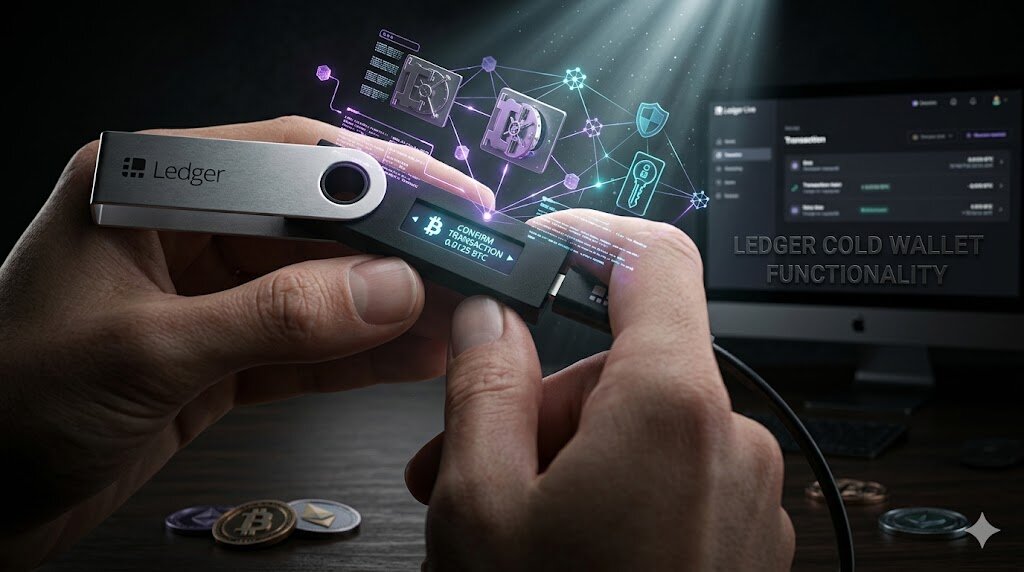
Curated DeFi Applications A Discover section within the wallet lists DeFi applications with Ledger integration. These applications went through evaluation before appearing in the curated list, providing some assurance beyond just any random dApp connection. Curation criteria include security audits, protocol maturity, ongoing operational status, and general reputation within the DeFi community. Not every established DeFi protocol appears in the curated list, since curation involves manual evaluation rather than automatic inclusion. Users seeking applications outside the curated list can still access them through WalletConnect. Native integration typically provides better information display than raw WalletConnect connections. Curated applications often show meaningful data about positions, expected outcomes, and various contextual information within the Ledger Live app interface rather than requiring users to switch between the wallet and external dApp interfaces.
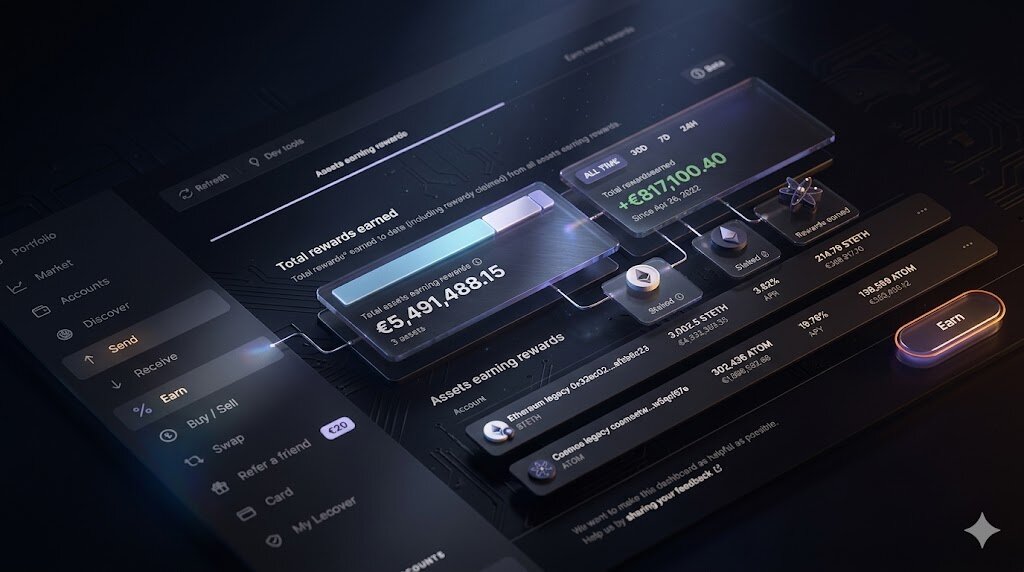
Direct Staking Access Staking represents one of the more thoroughly integrated DeFi categories. Users stake supported assets like Ethereum, Solana, Cosmos, Polkadot, and various others directly through the wallet interface without needing external tools. Delegation choices for staking usually involve validator selection. Ledger Live app interfaces present validator options with relevant information including commission rates, uptime
statistics, and various other quality metrics. Users compare validators and delegate to their chosen options, all through the wallet interface. Rewards accumulate through the underlying protocol mechanisms. Users see accumulated rewards through the wallet interface and can claim or restake them without external tool involvement. The integrated experience streamlines what would otherwise require multiple separate applications.
Swap Provider Ecosystem Asset swapping through Ledger Live works via multiple integrated providers rather than a single swap engine. Users comparing quotes across providers find better rates than committing to any single option would provide. Provider examples include Changelly, ParaSwap, 1inch, and various others depending on current integrations. Each provider handles the actual swap execution while Ledger Live displays their quotes and coordinates the transaction signing. Quote comparison happens automatically. Users specify what they want to swap and receive multiple provider quotes with different rates, fees, and execution characteristics. Selecting a preferred quote proceeds to actual execution through hardware-signed transaction, with the swap completing according to whichever provider handled the trade.
Ledger Live Wallet Meets Ethereum Ecosystem

EVM Chain Support Beyond Ethereum mainnet, EVM-compatible chains include Polygon, Arbitrum, Optimism, Base, BNB Smart Chain, Avalanche C-Chain, and various others. All these networks share similar technical foundations while operating as separate blockchains. Ledger Live handles multiple EVM chains through unified account abstractions. The same Ethereum account structure works across all EVM chains, meaning users have consistent addresses across networks even though each network's balance and transaction history remains separate. Chain switching within the interface lets users work with specific networks based on current needs. Someone with holdings across Ethereum mainnet and three Layer 2 networks can navigate between chains seamlessly. Transaction operations happen on whichever chain users select at the moment of the operation.
Token Approval Handling ERC-20 token operations sometimes involve approval transactions that authorize contracts to spend specific token amounts on behalf of the wallet. These approvals persist until explicitly revoked, creating potential security concerns if users approve unlimited amounts to malicious contracts. Ledger Live displays approval requests distinctly from regular transactions. Users see that they're authorizing a contract spending capability rather than performing an immediate transfer. This distinction matters because approval errors have delayed consequences that immediate transfer errors don't share. Managing existing approvals sometimes matters for security hygiene. Users who accumulated many approvals to various contracts over time sometimes want to revoke unused approvals to reduce their attack surface. External tools handle approval revocation more comprehensively than the native wallet interface, though basic revocation capabilities exist within Ledger Live. Web3 Access Method
How It Works
Best For
Native integration
Direct in-app functionality
Staking, swaps, curated dApps
WalletConnect
Encrypted protocol bridge
External dApps not natively integrated
MetaMask + Ledger
Extension controls transactions
DeFi-heavy workflows in browsers
Rabby + Ledger
Similar to MetaMask setup
Users preferring Rabby interface
Direct URL
Manual dApp access
Occasional use of specific dApps
Sign-in with Ethereum
Authentication signatures
Web3 identity for various services
Message signing
Off-chain agreements
Governance votes, off-chain approvals
Contract calls
Direct smart contract interaction
Advanced users with specific needs
Trade-Offs of DeFi Through Ledger Live
Every DeFi access method involves specific advantages and limitations. Understanding trade-offs helps users choose appropriate methods for their situations.
Security Benefits Over Software-Only Access Software wallets store keys on internet-connected devices. Malware potentially reaches these keys through various attack vectors including malicious browser extensions, compromised websites, and infected operating systems. Hardware wallets eliminate this attack surface by keeping keys physically isolated. For DeFi specifically, hardware protection matters more than for simple transfers. DeFi involves signing complex transactions where manipulation opportunities exist between user intent and actual signed data. Hardware devices displaying transaction details independently of computer displays catch manipulation regardless of software compromise.
Substantial DeFi positions concentrated in hardware-secured wallets face lower theft risk than equivalent positions in software wallets. This risk difference sometimes justifies workflow friction that hardware use introduces, particularly for users with significant positions to protect.
Workflow Friction Compared to Extensions Browser extension wallets provide the smoothest DeFi experience for daily use. Extensions inject themselves into every website with Web3 integration, automatically detecting DeFi apps and offering to connect with minimal friction. Ledger Live workflows involve more explicit steps. Opening the wallet, initiating connections, confirming operations on both application and hardware device screens. These steps add seconds or minutes to every operation compared to extension workflows that handle everything within one click. For users active in DeFi daily, this workflow difference matters. Some users combine approaches, using MetaMask with a Ledger device attached for daily activity while keeping larger positions in accounts accessed only through Ledger Live directly. Different tools suit different portions of their overall DeFi activity.
Missing Features Users Sometimes Notice DeFi power users occasionally find specific features missing from Ledger Live that competitors provide. Detailed transaction simulation showing expected outcomes before signing. Historical DeFi position tracking across many protocols. Advanced approval management with bulk revocation capabilities. These gaps don't prevent DeFi participation but sometimes push heavy DeFi users toward supplementary tools alongside Ledger Live. The wallet handles fundamental DeFi operations well while specialized DeFi tools handle analytical and management functions that generic wallets don't attempt to cover. Users satisfied with basic DeFi operations through hardware security find Ledger Live adequate for their needs. Users demanding maximum DeFi tooling sometimes maintain multiple applications, using each for its strengths while accepting the coordination overhead multi-tool workflows introduce.